Kush Mahal
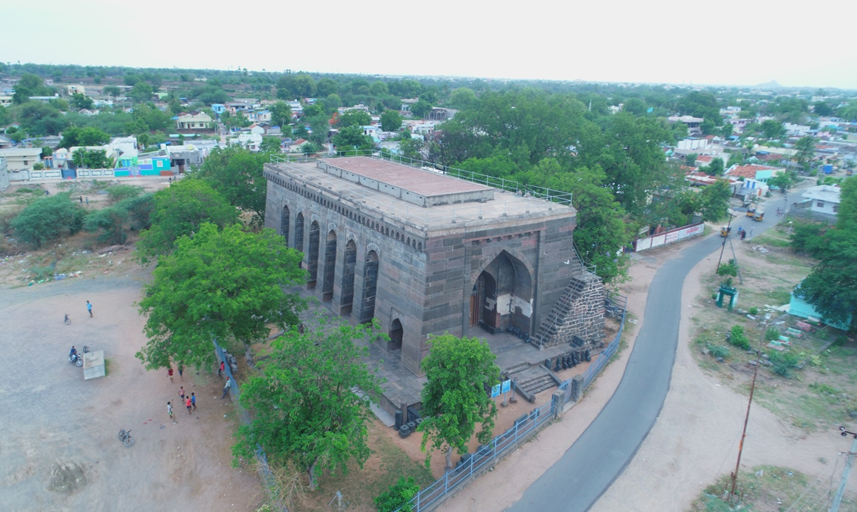
Kush Mahal
The Kush Mahal, also known as the Shitab Khan Palace, stands as an enduring relic of Warangal’s historical landscape.This rectangular building, with its Indo-Sarcenic architectural style, is a significant structure that offers valuable insights into the region’s architectural, political, and cultural history during the late medieval period.From an archaeological perspective, the Kush Mahal is not just a monument but a repository of information about the last political phase of Warangal’s history, particularly during the reign of Shitab Khan and his subsequent defeat by the Vijayanagar forces.
Architectural Features and Style:
Indo-Sarcenic Architecture:
The Kush Mahal's architecture is a remarkable blend of Indo-Sarcenic styles, characterized by its arched entrance and ceiling. This style is indicative of the cultural amalgamation that occurred in medieval India, where local Indian architectural traditions fused with Islamic architectural elements brought by various ruling dynasties.

Arched Entrance and Ceiling:
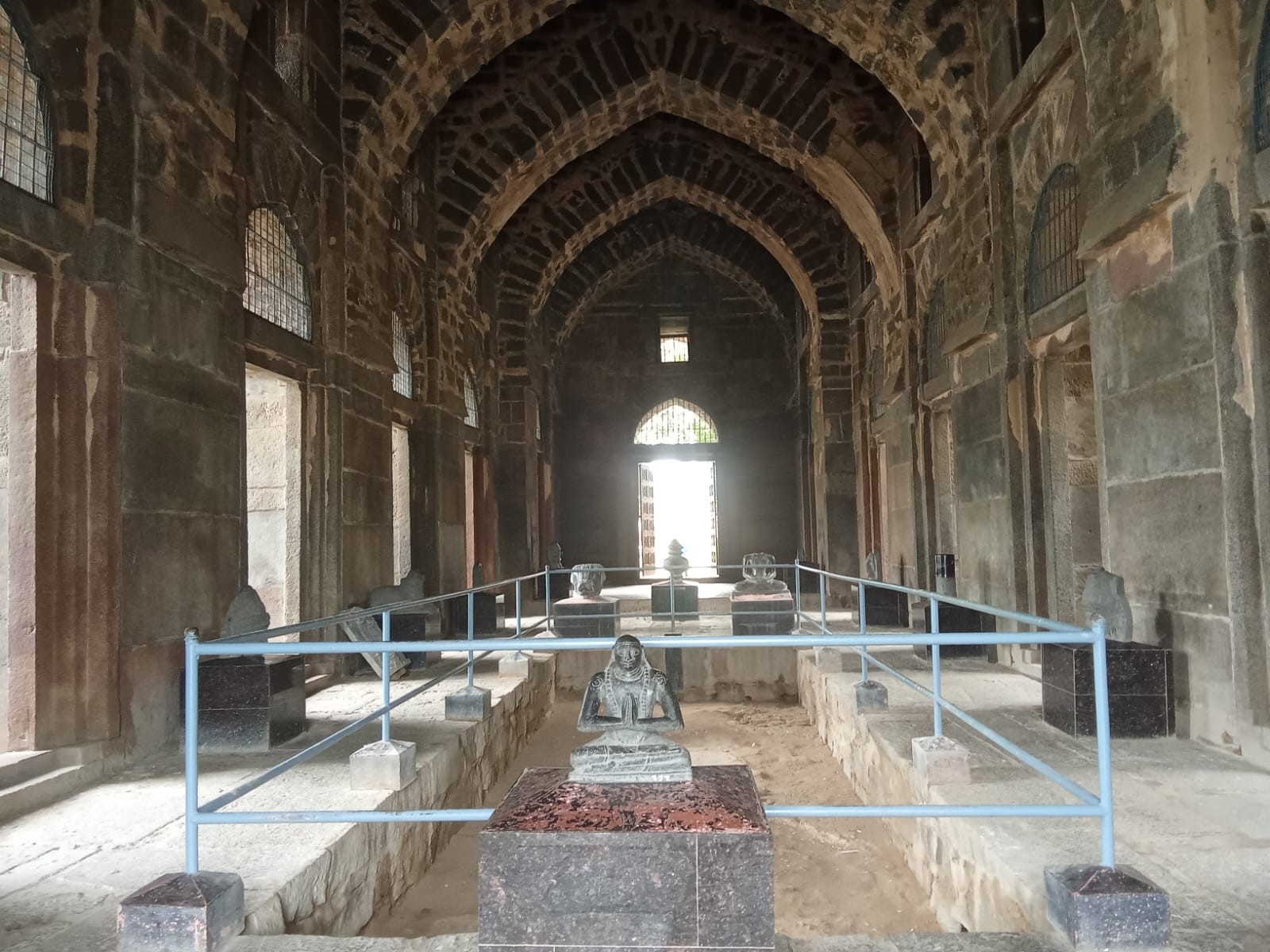
The front side of the building features an arched entrance, a prominent feature in Indo-Sarcenic architecture, which reflects the aesthetic and structural innovations of the period. The hall inside, with its arched ceiling, is an impressive example of medieval engineering.
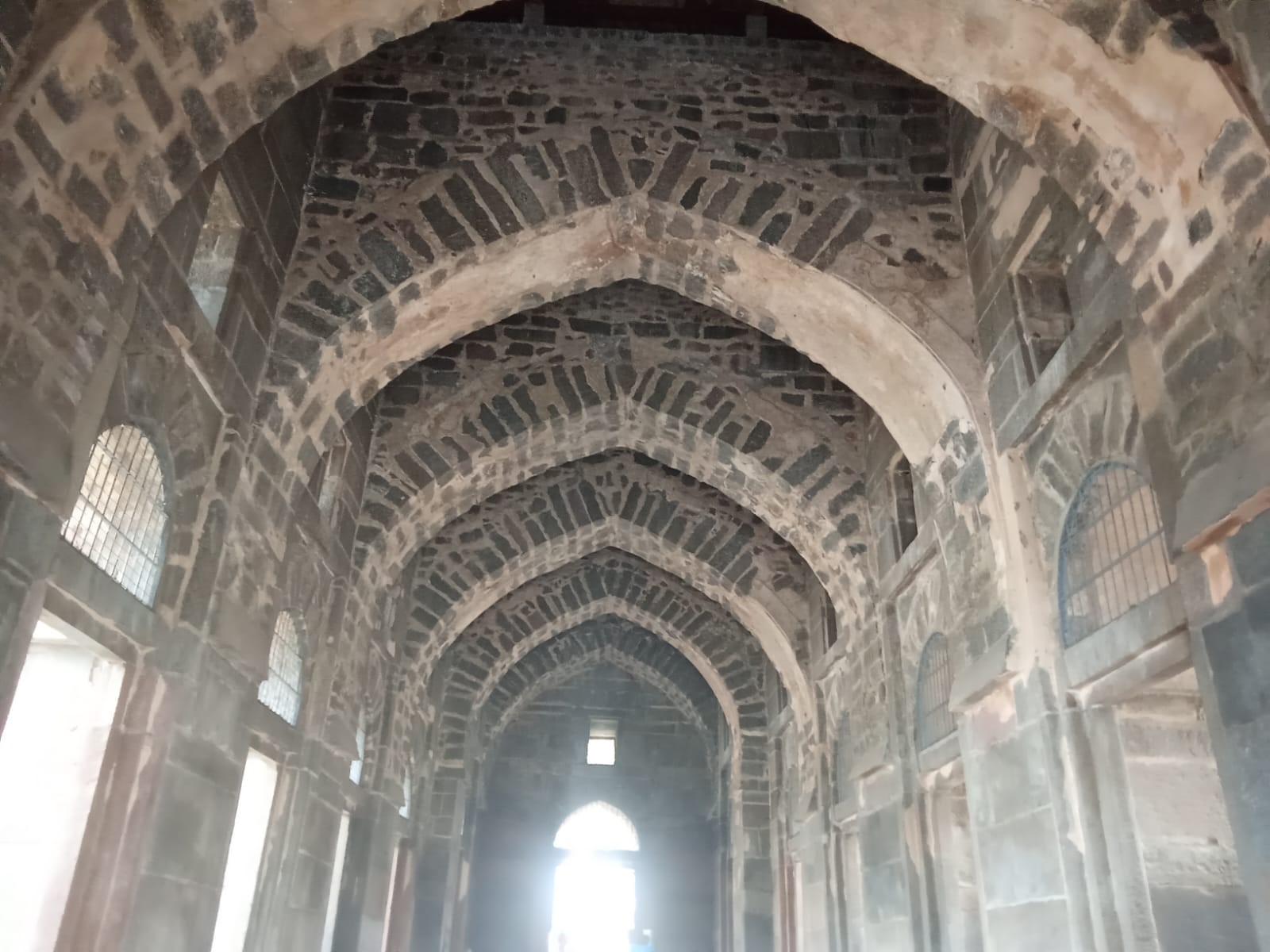
The way the arches join together to form the interior space demonstrates the architectural knowledge and skill of the builders. The use of arches not only provides structural support but also creates a visually pleasing rhythm and symmetry within the building.
Historical Context and Significance:
Political Dynamics:
The historical significance of the Kush Mahal is amplified by a lengthy inscription dated 1504 CE attributed to Shitab Khan. This inscription is a crucial primary source for understanding the political dynamics of Warangal during the early 16th century.
It provides detailed information on the governance, administrative policies, and socio-political conditions of the time. Such epigraphic evidence is invaluable for archaeologists and historians as it offers direct insight into the historical context in which the building was constructed and used.
Decline of Shitab Khan:
The inscription marks an important period in Warangal’s history, as it details the rule of Shitab Khan and the subsequent decline of his power. In 1518, Shitab Khan was vanquished by the Vijayanagar forces led by the renowned ruler Krishnadevaraya.
This event marked a significant shift in the political landscape of the region, transitioning from local rule to the dominance of the Vijayanagar Empire.
Archaeological Insights:
Epigraphic Evidence:
Archaeological excavations and studies of the inscription provide valuable information about the sociopolitical conditions and administrative practices of the time. These findings are crucial for understanding the broader historical and cultural context of late medieval Warangal.
Structural Analysis:
The architectural elements and construction techniques used in the Kush Mahal offer insights into the technological advancements and stylistic preferences of the period. This analysis helps historians and archaeologists piece together the historical narrative of the region and its architectural evolution.
Did you like this ?